Eva López-Sánchez talks about La Ultima Y Nos Vamos
November 4, 2011 § 2 Comments
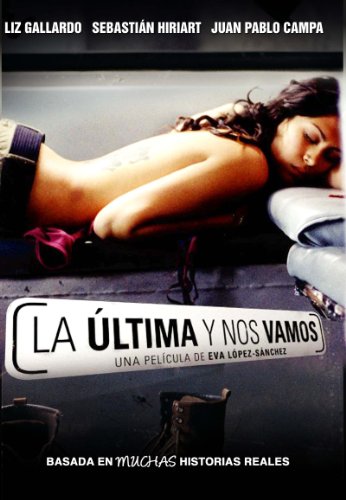
La Ultima Y Nos Vamos
In her latest feature film, Eva López-Sánchez takes us along with three 20-year-olds on a Friday night in Mexico City. Each gets pulled into a different party crowd throughout the film, away from the safety of their bodyguards and parents.
La Ultima y Nos Vamos (One for the Road) made its public debut at the 23rd Annual Guadalajara International Film Festival and its California debut in the Bay Area. The filmmaker attended three Bay Area screenings to entertain Q&A.
Her remarks
“It’s a take on Mexico that isn’t seen by American audiences,” says López-Sánchez. “You’ve only seen a violent and corrupt Mexico City. My film showcases the music and lifeblood of our Friday nights. We’ve all had one of them, thinking ‘what am I doing here?’ Meeting with people who we wouldn’t regularly meet with, the story is universal.”
La Ultima y Nos Vamos toured cinemas in the U.S., France and Mexico before its release onto DVD.
“I love the film. I love how you captured a bird’s eye view of Mexico City in your intro and your soundtrack speaks to me,” an audience member said in San Jose. “I grew up in Mexico City and your film took me back home.”
“We took six flights over the city, shooting various districts. It’s Mexico City today with its mix of cultural influences.” She filmed the capitol, nightlife, and the dark allies like only a native could. “The city is full of surprises. I can be anywhere in the city at any time of day or night and still discover a new amazing neighborhood jewel.”
The audience at the Lumiere Theatre in San Francisco responded, “What inspired you to make this film? ”
“My son came to me with an incredible story line about these kids ending up with completely different crowds – in neighborhoods they shouldn’t have been in.” The film explores how people relate with others who are completely different and “can find something human. It’s about relating despite our differences.”
Her writing process
“I told my son to write it all down and we’d make a movie out of it. He told me, ‘I don’t know how to write a film.’ So I told him to write what ever he could and to write it in the first person and I would help him with the rest.”
She attended Mexico City’s Centro de Capacitación Cinematográfica, has made six full length films and several short films since. Her directorial debut was with Francisca, a political period drama that looks at Mexico City’s Tlalteloco massacre of 1968, where hundreds of student protesters were killed. Her first three films were documentaries and the latest works have been feature films.
“I didn’t want to write this film because I would write it with all of my experience- through my old eyes. I wanted a fresh perspective. I wanted his young eyes to tell the story.” He brought her the story on eight handwritten pages. “It was fresh and it was fun.”
During a radio interview, Margarita of San Francisco’s Pirate Cat Radio mentions that films from Latin America often emulate their European influences instead of portraying Indo Latinos the way La Ultima y Nos Vamos does.
“The characters have different backgrounds, but they’re tied together by predominant cultural influences. They’re very Mexican in character. They use Mexicanisms. They share Mexican music roots.”
The score
Music in the film complemented each character’s personality. “As a filmmaker, you have to be in the know. I have a network of different artists that keep me up to date with their latest work.” Among the artists are MC Luca a hip-hop artist and Big Metra. “Niña Dioz is a reggae artist who wrote Criminal Sound specifically for the film. She’s from Monterrey, Mexico and is only 20 years old.”
The film’s instrumental music, which is also know as the score, was a collaboration between López-Sánchez and Renato y Ramiro del Real who are well known music production artists from Mexico City. La Ultima y Nos Vamosis is their second feature film project.
“Film is important because it’s a universal way to communicate facts of life and human nature. You can have the notion of an experience, but by watching it play out on film you can live that experience almost first hand. Film resonates with you and affects you the way that no other medium can.”
The Storm That Swept Mexico
March 29, 2011 § Leave a comment
Pancho Villa
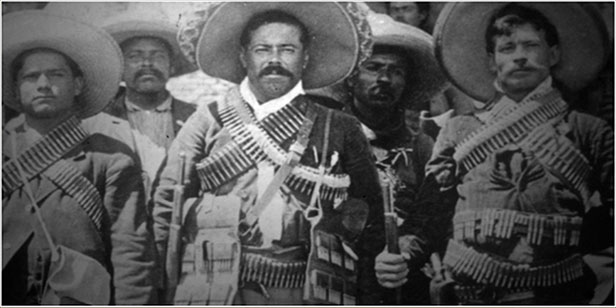
Ten years in the making by Bay Area filmmakers Ray Telles and Kenn Rabin, The Storm That Swept Mexico is a powerful exploration of one of the most fascinating eras in modern history.
This exclusive new documentary THE STORM THAT SWEPT MEXICO, which tells the epic story of the Mexican revolution of 1910, the first major political and social revolution of the 20th century, will screen only one night in the Bay Area and will be followed by a conversation with the filmmakers, Ray Telles and Kenn Rabin.
This rare footage will be on the big screen Thursday, March 31, 7:00pM at 1118 Fourth Street, San Rafael. Call 415.454.1222 for more information. This is a California Film Institute screening.
Watch the trailer.
TRAILER – The Storm That Swept Mexico from Paradigm Productions on Vimeo.
Somos Lo Que Hay at San Diego Latino Film Festival
March 11, 2011 § Leave a comment

Somos Lo Que Hay
The 18th annual San Diego Latino Film Festival kicks off tonight with a screening of the highly anticipated thriller Somos Lo Que Hay, a Canana film about cannibals in modern day Mexico City.
I’m excited to see it along with a slew of new Spanish language films this weekend. Tweet me if you’re out there @sflatinofilm.
To get more information about San Diego Latino Film Festival screenings go to sdlatinofilm.com, follow them on Twitter @macsd and follow hashtag #SDLFF.
Here’s a trailer of Somos Lo Que Hay.
Directed by Jorge Michel Grau.
 The Archives of My Mind