Call For Film Entries
March 16, 2011 § Leave a comment
 The San Francisco Latino Film Festival is now accepting film entries.
Films made by, about or with Latinos from the U.S. and abroad are encouraged to enter.
To qualify films must be made between 2008 and now. Short and feature films are welcome to enter and the deadline to submit is June 3, 2011.
Click here for the PDF entry form. If you have questions, email info@sflatinofilmfestival.com.
Follow SF Latino film happenings on Twitter and like the SF Latino Film Festival on Facebook to join the conversation.
Good luck!
Somos Lo Que Hay at San Diego Latino Film Festival
March 11, 2011 § Leave a comment

Somos Lo Que Hay
The 18th annual San Diego Latino Film Festival kicks off tonight with a screening of the highly anticipated thriller Somos Lo Que Hay, a Canana film about cannibals in modern day Mexico City.
I’m excited to see it along with a slew of new Spanish language films this weekend. Tweet me if you’re out there @sflatinofilm.
To get more information about San Diego Latino Film Festival screenings go to sdlatinofilm.com, follow them on Twitter @macsd and follow hashtag #SDLFF.
Here’s a trailer of Somos Lo Que Hay.
Directed by Jorge Michel Grau.
Bay Area Latino Film Begins a New Chapter
March 8, 2011 § Leave a comment
 Cine+Mas SF, a new organization producing the San Francisco Latino Film Festival successfully wrapped year two of their September events. A group of ten Bay Area film lovers run this non-profit organization with Fractured Atlas as its fiscal sponsor.

The group pushes messages online, on the streets, via radio and on news stations like CBS5 – all in an effort to keep the Latino film movement thriving in the SF Bay Area. Shows were presented in San Francisco, Marin, Redwood City, the Silicon Valley at The Tech Museum of Innovation and in Berkeley.
The festival showcased 30 films including shorts, documentaries, and features. Eight countries were represented including Mexico, Peru, Argentina, Venezuela, the Dominican Republic, Uruguay, Brazil, and the USA.
Seven filmmakers were in attendance including Florence Jaugey, director of the Oscar nominated film, ‘La Yuma’.
It’s not a festival without parties and there were several including a smash opening night at the new SOM SF in partnership with Latinos a Morir. Other events included Project One closing night at Sub-Mission, and their annual IMAX event at the Tech Museum of Innovation in San Jose.
“Our mission is to step forth as a new organization with fresh eyes” says their founder, Lou Ramirez. “We were successful in doing so, showcasing two Oscar nominated films in the foreign film category.”
The website contains constantly updated information. View call for entry details, film trailers along with film notes and links their Facebook page: www.sflatinofilmfestival.com or follow them on http://Twitter.com/sflatinofilm.
Does Ethnocentrism Exist in America Today?
March 7, 2011 § Leave a comment
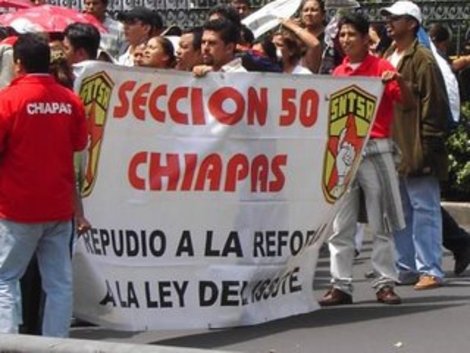
Protesters at Mexico City’s Paseo de la Reforma
Ethnocentrism as it relates to our society today is still an issue and I can’t help but tie a film I saw last summer into my thoughts on the subject.
I presented a documentary feature film at San Jose Public Library: Hillview Branch during the Bay Area Latino Film Festival’s summer program. The film titled Crossing Arizona is a documentary about the very popular anti-immigration sentiment among several Arizonians in modern day.
Among those interviewed for the film were leaders from the Minuteman Project. The Minuteman Project is a group of militia oriented activists who have devoted their time to patrolling the Mexican – U.S. border.
“If we eliminate illegal immigration there would be no more drugs, no more crime, no more deaths. It’s beyond logical,” a Minuteman said while driving to his patrol site.
The group has been active since 2005 and throughout these years has drawn both negative and favorable publicity to their gun totting, anti-immigration patrol tactics.
Following his commentary, photos of a woman shot to death in the desert flashed the movie screen leaving viewers in shock.
The woman was pregnant.
I was left pretty bothered by the film’s contents. Minutemen are spitting on the very principle of life. Hope for a change that their ancestors had when making the journey to the U.S. – totally forgotten.
Not only are Minutemen textbook ethnocentrics, but they’re breeding generations of hate without consequence in Arizona. This mentality isn’t conducive to civil cohabitation.
Aside from the statements made by the Minuteman, the philosophies of the group are very much blinded by a sense of ownership over American soil. Their view of right and wrong is blurred, so much in fact that a complete abuse of human life is practiced.
They feel referent power over immigrants but not just any immigrants, Mexican immigrants who for the most part come to this country to work jobs that Americans don’t want to work.
Needless to say, I was sickened by the utter disregard for the fact that America is a melting pot and everyone, aside from Native American Indians, has history in immigrating here and Arizona use to be Mexican soil.
Besides all that though, this is a communication issue that still very much contributes to the way people form groups and ideologies. It gave me a lot to think about in terms of where our society is in regard to human rights.
Robert Rodriguez in THE BLACK MAMBA
March 6, 2011 § Leave a comment

Filmmaker Robert Rodriguez
For the first time in our film recollection, veteran filmmaker Robert Rodriguez appears in one of his films – his short about Kobe Bryant titled THE BLACK MAMBA.
The short film for Nike also stars Danny Trejo, Kobe Bryant, Kanye West, Bruce Willis and some wicked looking basketball beasts.
Here it is in its entirety. Enjoy!
follow me on twitter @vc29
Eva López-Sánchez Talks About La Ultima Y Nos Vamos
January 24, 2010 § Leave a comment
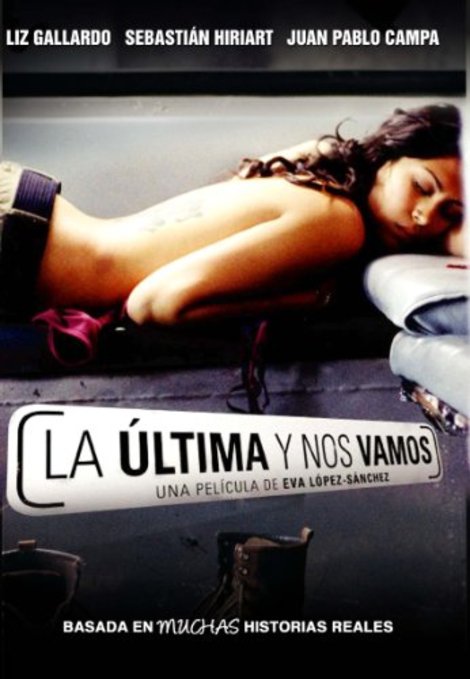 In her latest feature film, Eva López-Sánchez takes us along with three 20-year-olds on a Friday night in Mexico City. Each gets pulled into a different party crowd throughout the film, away from the safety of their bodyguards and parents.
La Ultima y Nos Vamos (One for the Road) made its public debut at the 23rd Annual Guadalajara International Film Festival and its California debut in the Bay Area. The filmmaker attended three Bay Area screenings to entertain Q&A.
Her remarks
“It’s a take on Mexico that isn’t seen by American audiences,” says López-Sánchez. “You’ve only seen a violent and corrupt Mexico City. My film showcases the music and lifeblood of our Friday nights. We’ve all had one of them, thinking ‘what am I doing here?’ Meeting with people who we wouldn’t regularly meet with, the story is universal.”
Cine+Mas Film Festival chose La Ultima y Nos Vamos as its closing night film. November of 2010 was the last time the film screened to audiences before it toured cinemas in France and Mexico.
“I love the film. I love how you captured a bird’s eye view of Mexico City in your intro and your soundtrack speaks to me,” an audience member said in San Jose. “I grew up in Mexico City and your film took me back home.”
“We took six flights over the city, shooting various districts. It’s Mexico City today with its mix of cultural influences.” She filmed the capitol, nightlife, and the dark alleys like only a native could. “The city is full of surprises. I can be anywhere in the city at any time of day or night and still discover a new amazing neighborhood jewel.”
The audience at the Lumiere Theatre in San Francisco responded, “What inspired you to make this film? ”
“My son came to me with an incredible story line about these kids ending up with completely different crowds – in neighborhoods they shouldn’t have been in.” The film explores how people relate with others who are completely different and “can find something human. It’s about relating despite our differences.”
Her writing process
“I told my son to write it all down and we’d make a movie out of it. He told me, ‘I don’t know how to write a film.’ So I told him to write what ever he could and to write it in the first person and I would help him with the rest.”
She attended Mexico City’s Centro de Capacitación Cinematográfica, has made six full length films and several short films since. Her directorial debut was with Francisca, a political period drama that looks at Mexico City’s Tlalteloco massacre of 1968, where hundreds of student protesters were killed. Her first three films were documentaries and the latest works have been feature films.
“I didn’t want to write this film because I would write it with all of my experience- through my old eyes. I wanted a fresh perspective. I wanted his young eyes to tell the story.” He brought her the story on eight handwritten pages. “It was fresh and it was fun.”
During a radio interview, Margarita of San Francisco’s Pirate Cat Radio mentions that films from Latin America often emulate their European influences instead of portraying Indo Latinos the way La Ultima y Nos Vamos does.
“The characters have different backgrounds, but they’re tied together by predominant cultural influences. They’re very Mexican in character. They use Mexicanisms. They share Mexican music roots.”
The score
Music in the film complemented each character’s personality. “As a filmmaker, you have to be in the know. I have a network of different artists that keep me up to date with their latest work.” Among the artists are MC Luca a hip-hop artist and Big Metra. “Niña Dioz is a reggae artist who wrote Criminal Sound specifically for the film. She’s from Monterrey, Mexico and is only 20 years old.”
The film’s instrumental music was a collaboration between López-Sánchez and Renato y Ramiro del Real who are well known music production artists from Mexico City. La Ultima y Nos Vamosis is their second feature film project.
“Film is important because it’s a universal way to communicate facts of life and human nature. You can have the notion of an experience, but by watching it play out on film you can live that experience almost first hand. Film resonates with you and affects you the way that no other medium can.”
Novella to Film: What’s the Diff?
October 23, 2009 § Leave a comment
You can’t deny that novel adaptations to film change everything about the delivery of the original story. These mediums carry different visual and verbal cargo. Words execute emotions and film is like art.
It’s limited to the screen you’re viewing it on, like a painting, whether it is on the silver screen or your TV. Film is movement, lighting, color and timing-exactly how the director, cast and crew want you to see it.
Novels, however, whisper the narrator’s inner-most complicated dialogue, line by line, quietly describing to you their plight with love and heartache, death and excitement. Novels leave the visual element up to the narrator’s exaggerations. Story lines may change, but the heartbeat from novel to film drum the same beat.
Film exercises your mind via visual suggestions in a way that a book uses words. For example in film The Commitments Jimmy’s dad had a strange fascination with Elvis that wasn’t written in the book. What does this Elvis loving, wannabe band member tell the viewer? Personally, I was embarrassed for Jimmy and secretly wanted to quiet dad down when he sang Fools Rush In at the kitchen table.
Jimmy, in a funny way, is takes after his father in the film. He peruses music as his passion, in an over obsessive and too cocky for his own good kind of way. Jimmy’s character in the novel; however, doesn’t have much influence from his parents. He’s more of a lone star. His borderline overzealous fascination with music is illustrated by his “never coming back from town without an album.” Jimmy was a slave to his obsession and made it obvious that, “he knew his stuff.”
Both scenarios on paper and screen project to reader and viewer, that Jimmy’s character is of the fool embarking a on a journey to the unknown. He’s innocent in both cases and had musical influences growing up.
When watching motion picture, our eyes are hungry for movement and symbolic queues to trigger meaning. Filmmakers work at satisfying that urge. The literal narrators whispers don’t translate on screen as effectively as they do when they are read. Our minds eye is allowed to elaborate on the written version in a way that satisfies the reader-because we can make it our own.
In the novella, The Commitments, music played a key role. It took up more page and eye and head space than it took up time on screen but didn’t change the heartbeat of the story. The music in the novel cried out soul, nearly beating the notion of the band’s soul music mission to the ground.
Build up is created when Jimmy suggests the bands covers Get Up by James Brown. Sexual tension ensues, Jimmy plays the record for the boys and-while sitting with his legs between the speakers. James belts out “the best -HUH they’ve ever heard.” This scene in the book turns the reader on and builds on something to look forward to.
The film set a different stage for the first music scene. It was awkward, unprofessional and everyone was so green. Derrick steps up to the mic and belts out in an impressive harmonic shout -“MUSTANG SALLY.” I was sold. It was as dramatic as their “best ever” experience with “HUH”. Everybody knows the “HUH” and everybody can hear it in their heads-this is what made the novel effective without actually hearing it real time like you do with film.The film gives you a sexy lead man singing his heart out. Same effect.
Music is filled with emotion and it is what made The Commitments exciting to watch. Adaptations from novel to film are all about character development. Novels spend more time with the main characters thoughts, intentions and history. Without such background, the reader looses the character’s persona.
In film, personality can be covered by casting and costume, soundtrack and lighting. The pulse of The Commitments didn’t skip a beat from novel to film even though scenes were manipulated for silver screen success.
 The Archives of My Mind